
THE SURVEYOR’S NOTEBOOK
GRP Flat Roofs: When Ponding, Poor Detailing and Patch Repairs Point to Early Failure
Brendan O’Callaghan MRICS
Introduction: GRP, or glass-reinforced plastic, can provide a satisfactory flat-roof covering when it is correctly designed, carefully prepared and installed as a complete proprietary system. During a recent Level 3 survey, however, extensive GRP roof areas displayed several warning signs that suggested poor workmanship, inadequate detailing and an increased likelihood of premature deterioration.
At a Glance
Concern: Large GRP roof areas showed ponding, silt staining, rough surfaces, pinholes, non-proprietary edge details and numerous patch repairs.
Risk: Poor falls, inadequate resin coverage or consolidation, weak detailing and repeated local repairs can shorten the serviceable life of the covering and increase the likelihood of water ingress.
Action: Obtain a specialist roofing contractor’s assessment and budget for further repairs or complete replacement during ownership.
Overall view: When considered alongside the other external defects identified, the roof condition materially increased the property’s maintenance and expenditure risk.
What Was Observed
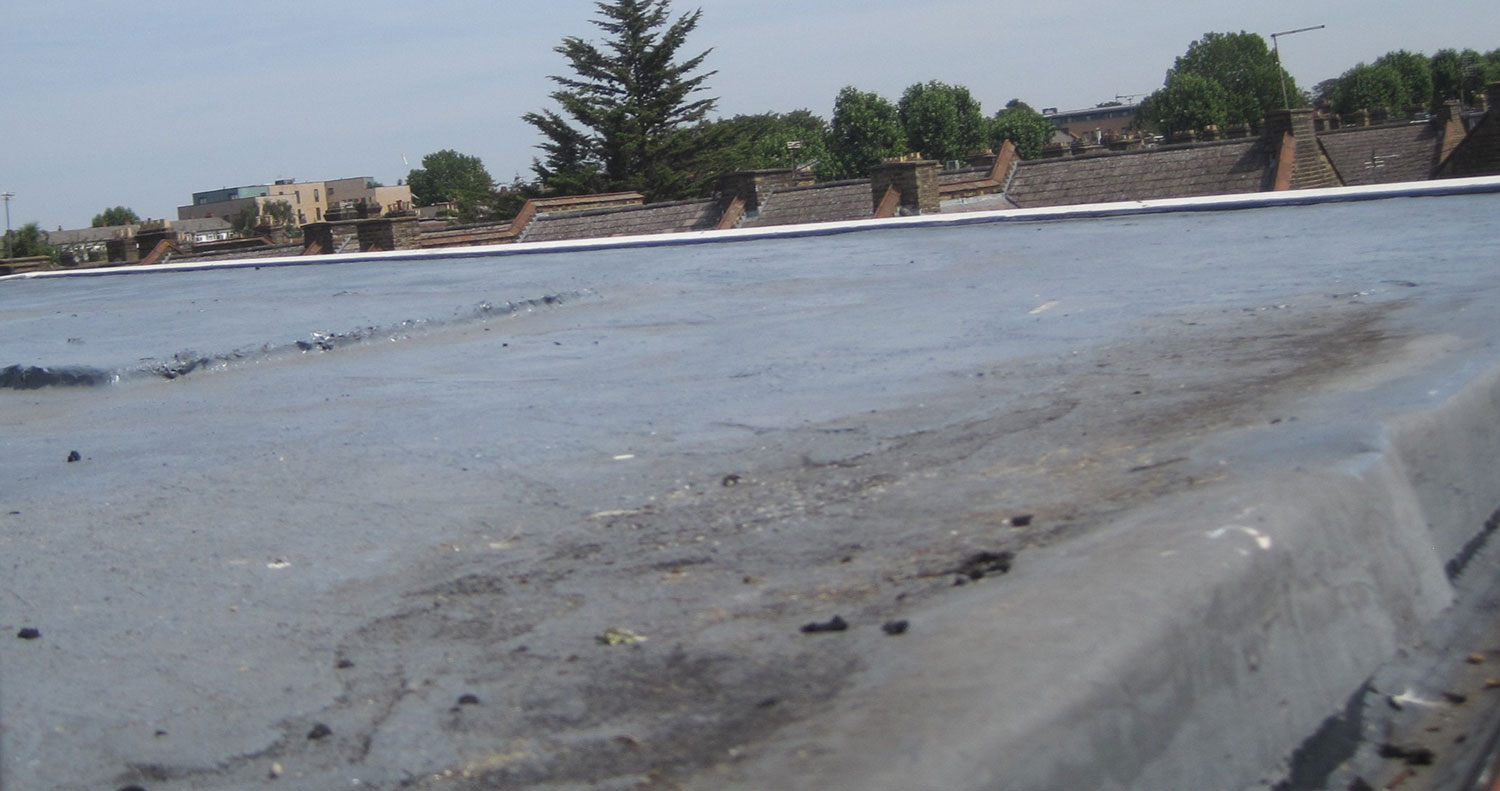
Large areas of flat roof were covered with GRP. Several sections showed pronounced silt staining and discolouration, indicating that rainwater regularly remained on the surface rather than draining freely. Persistent ponding can retain dirt and moisture, expose weaknesses in the finish and accelerate deterioration, particularly where the laminate or topcoat has not been applied consistently.
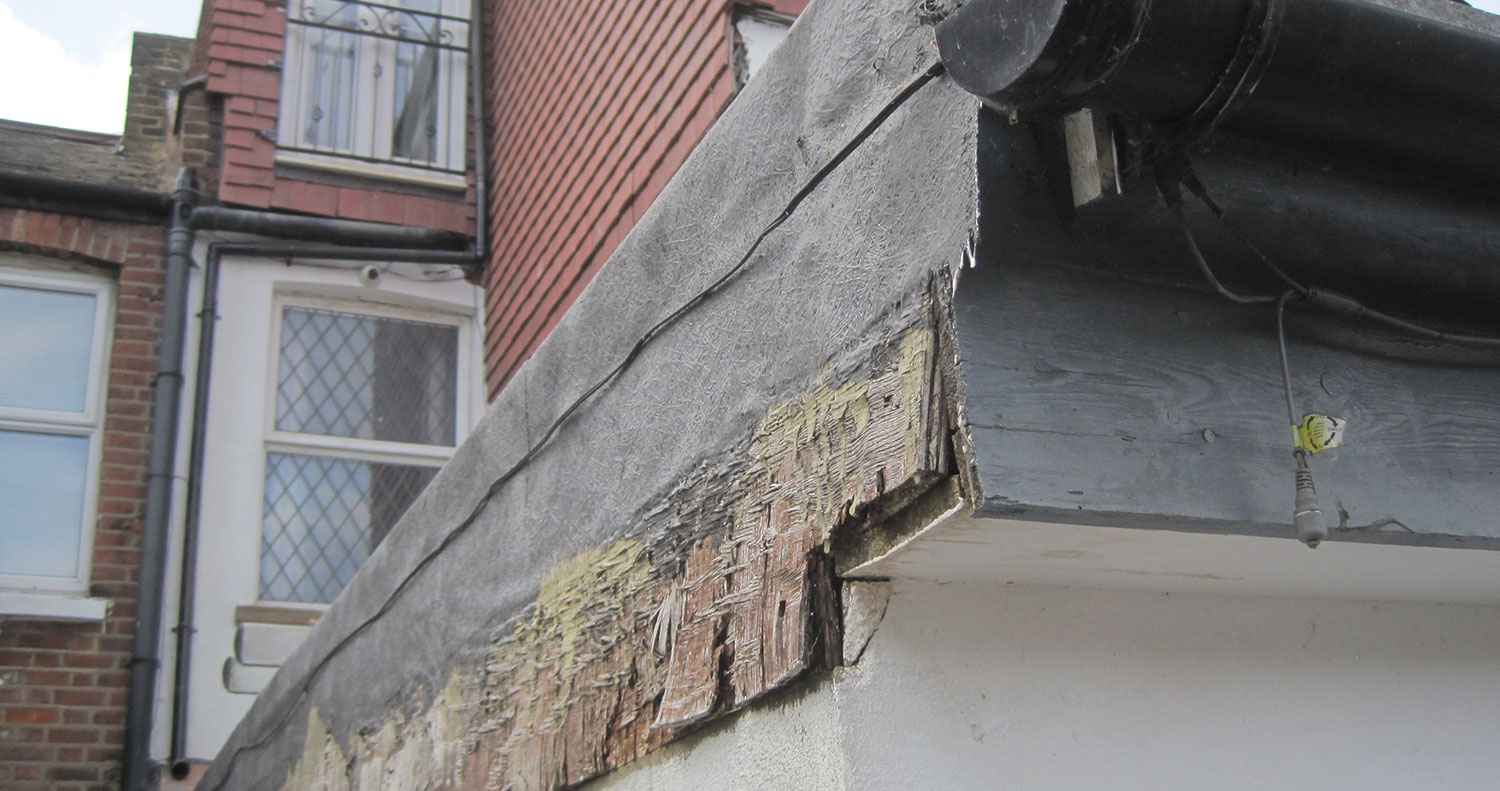
The roof edges and perimeter details did not incorporate recognisable proprietary trims normally associated with a complete GRP roofing system. The detailing appeared improvised in places and gave the impression that the work may not have been undertaken by a specialist installer familiar with the manufacturer’s full system requirements.
Why the Surface Finish Matters
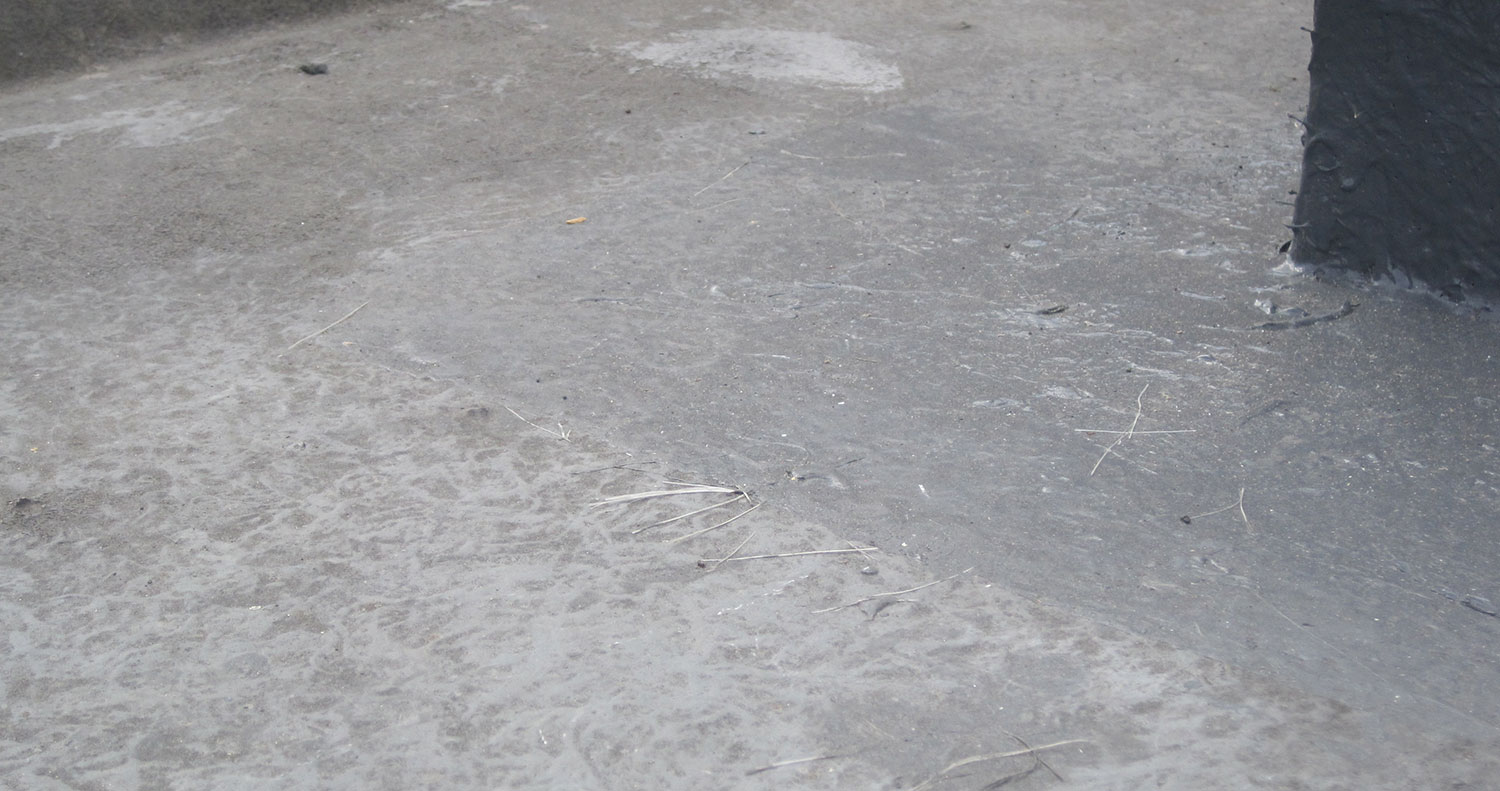
The GRP surfaces were rough and locally irregular, with some pinholes visible. These defects can arise where the glass-fibre mat has not been properly consolidated, air has remained trapped within the laminate, or insufficient resin has been used. Correct resin coverage is important because the fibres must be fully wetted and encapsulated to create a continuous waterproof layer. Pinholes, dry fibres and poorly consolidated areas can provide routes for moisture and may become more vulnerable as the covering weathers.
Patch Repairs Around the Skylights
Numerous patch repairs had been applied around the skylights. Repairs of this nature do not necessarily mean that a roof is currently leaking, but repeated localised treatment usually indicates that previous problems have occurred at vulnerable junctions. Skylight upstands, corners and changes in plane require particularly careful detailing, and repeated patching can point to shortcomings in the original installation rather than an isolated defect.
Why Ponding Should Not Be Dismissed
A flat roof is not expected to be perfectly dry immediately after rainfall, but extensive or persistent ponding suggests inadequate falls, local deck irregularities or poorly positioned drainage outlets. Standing water increases the period for which defects are exposed to moisture and can worsen the effects of surface imperfections, ultraviolet degradation and movement within the deck. It also makes future leakage more difficult to trace because water may travel across the surface before finding an entry point.
What I Would Tell My Client
|
Practical Next Steps
Ask an experienced GRP roofing contractor to inspect the roof coverings, falls, outlets, skylight junctions and perimeter details.
Obtain costed options for targeted repairs and for full replacement, rather than relying only on further patching.
Check whether any installation guarantee, manufacturer’s details or contractor records are available.
Allow for the possibility that sections of the roof deck may require repair or renewal once the covering is stripped.
Consider the roof defects together with the wider repair liabilities before exchange of contracts and during price negotiations.
The Surveyor’s View
GRP is not inherently an unsuitable flat-roof material. The concern arises when the installation lacks proper falls, consistent consolidation, sufficient resin coverage and the correct proprietary trims and junction details. In this case, the number and combination of visible shortcomings suggested more than routine ageing. While the exact concealed condition of the deck could not be established without opening up, the prudent advice was to anticipate ongoing repair and likely replacement costs rather than assume the covering would remain dependable throughout the client’s ownership.
A Level 3 Survey looks beyond the visible surface to explain how defects may affect future maintenance, cost and purchasing risk