
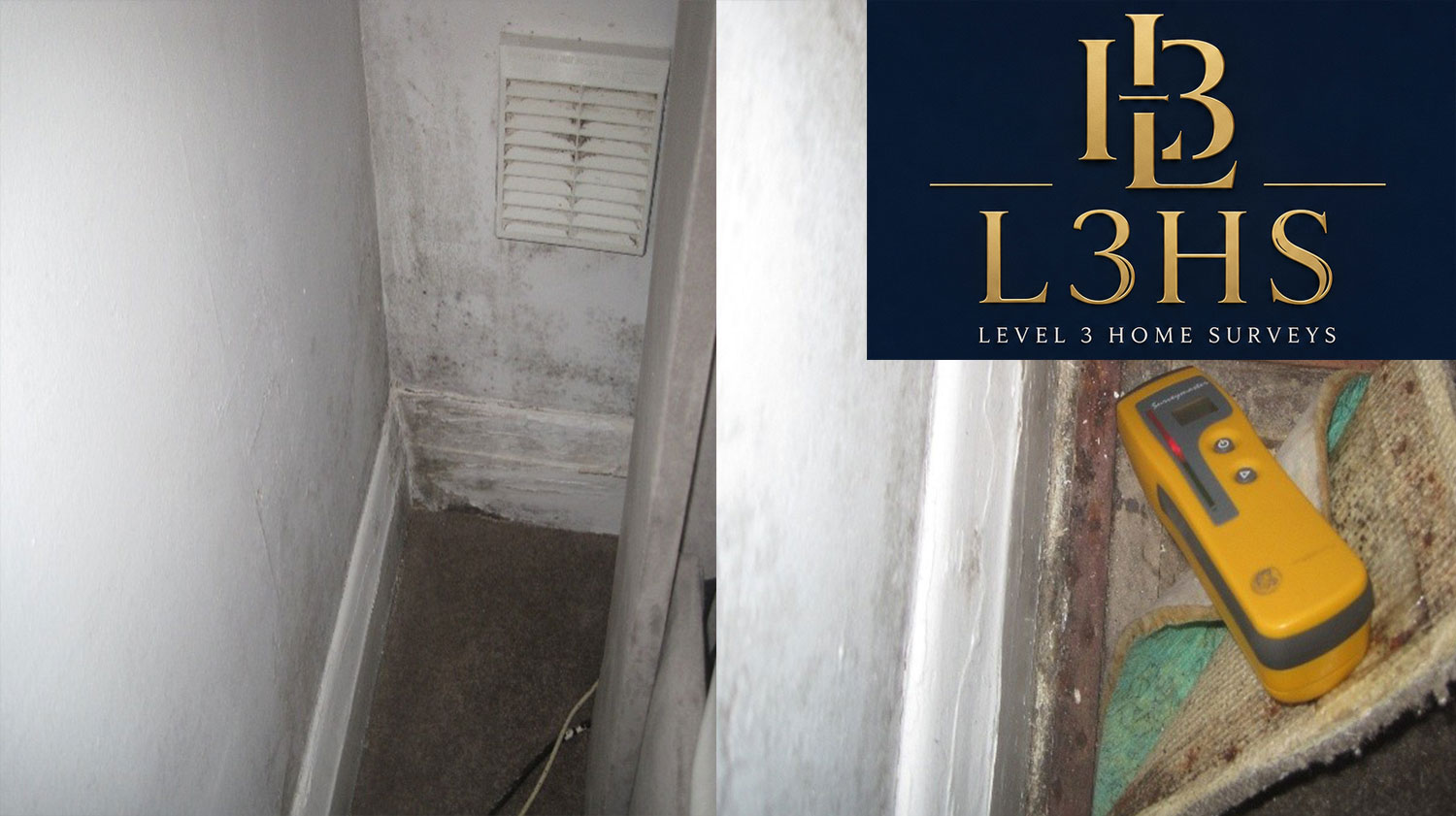
Dampness can have many causes and simply obtaining a high moisture-meter reading does not establish that a property has rising damp.
Level3HomeSurveys Ltd provides independent investigations of dampness, condensation and moisture-related defects in residential property.
Our aim is to identify the most probable source of the moisture, explain why it is occurring and advise on sensible remedial measures.
Common damp and moisture problems
We regularly investigate issues including:
- damp patches to walls and ceilings
- mould growth
- condensation
- penetrating rainwater
- moisture around windows and external walls
- dampness at low level
- defective gutters and rainwater goods
- leaking roofs and flashings
- plumbing leaks
- bridging of damp-proof courses
- high external ground levels
- poorly ventilated sub-floor voids
- timber decay associated with prolonged dampness
- dampness following refurbishment or insulation works
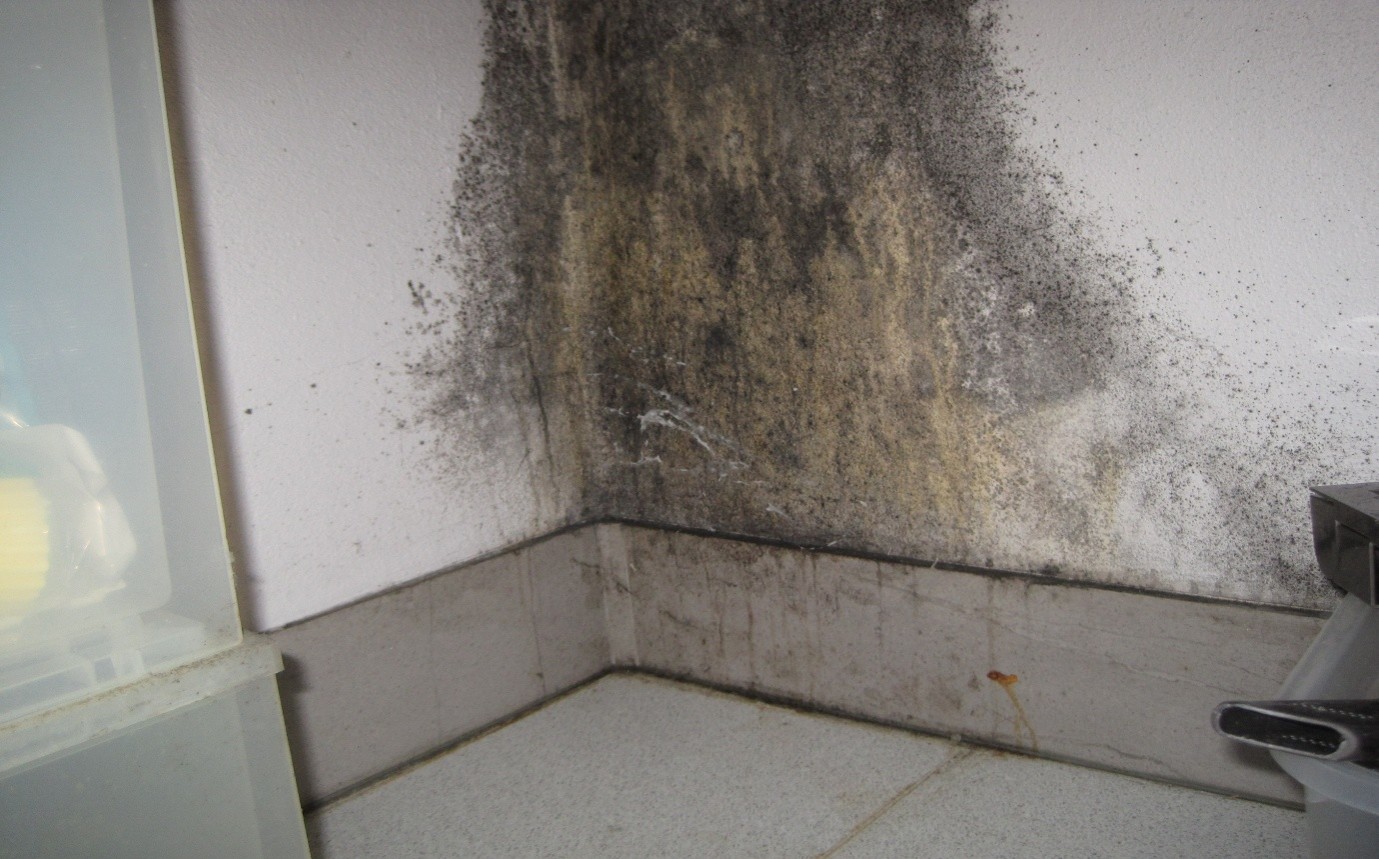
Construction deficiencies we suspect had played a part in the mould growth and lack of adequate ventilation and imbalance of heating.
Older buildings in particular need to be considered in the context of their original construction and the materials subsequently introduced.
Finding the cause
Successful damp investigation involves more than taking moisture readings.
During the inspection we consider how moisture could be entering, forming within or becoming trapped in the building.
Depending upon the circumstances, this may include assessment of:
- roof coverings and rainwater disposal
- external walls and pointing
- windows and doors
- ground levels
- internal plumbing
- ventilation
- heating and occupation patterns
- insulation
- suspended timber floors
- chimney breasts
- previous waterproofing or damp-proofing work
Moisture readings may be taken where useful, but these are interpreted alongside the construction of the property and visible evidence.
Rising damp is not the default diagnosis
Low-level dampness can arise for many reasons, including external ground levels, leaks, condensation, salts, defective drainage and restricted evaporation.
We therefore avoid assuming that chemical damp-proofing is required simply because moisture is present.
Where previous damp-proofing works have been carried out, we can also consider whether they appear relevant to the actual problem.
Condensation and mould
Condensation is increasingly common where buildings have been upgraded or altered without adequate consideration being given to ventilation.
Where mould growth or surface condensation is present, we consider factors such as:
- ventilation
- extraction
- insulation
- cold bridging
- heating patterns
- internal humidity
- furniture position
- roof-space ventilation
The solution may involve several relatively modest improvements rather than extensive building work.
What you receive
Following our inspection, we can provide a written report setting out:
- the areas affected
- the likely source or causes of moisture
- contributing construction defects
- the significance of the problem
- any further investigation considered necessary
- recommended repairs or improvements
Where appropriate, this can provide a useful independent basis before obtaining quotations from damp-proofing companies or contractors.
Independent Advice
We do not sell damp-proofing systems or remedial treatments.
Our role is to provide independent Chartered Surveying advice based on the condition and construction of the building.
Arrange an Inspection
If you have persistent dampness, mould or unexplained moisture within your property, send us some initial photographs and a brief description of the problem.
We can advise whether a focused damp and moisture inspection would be appropriate.