
THE SURVEYOR’S NOTEBOOK
Asbestos-Cement Roof Slates: When Are They at the End of Their Serviceable Life?
Brendan O’Callaghan MRICS
Introduction: Asbestos-cement slates remain a familiar roof covering to older garages, outbuildings, extensions and, in some cases, principal roof slopes. Their presence does not automatically make a building unsafe nor does it mean immediate removal is always required. The key issue is usually condition. As these coverings age, they can become increasingly weathered and brittle, making local repairs less practical and eventual replacement more likely.
At a Glance
Concern: Ageing asbestos-cement roof slates that appear weathered and increasingly brittle.
Risk: Repairs become less reliable over time, disturbance can release fibres, and replacement costs can be higher due to controlled removal and disposal requirements.
Action: Assess condition carefully, avoid unnecessary disturbance, and obtain budget advice where replacement is foreseeable.
Timing: Usually planned rather than panic-driven, unless there is active failure or damage.
What Was Observed
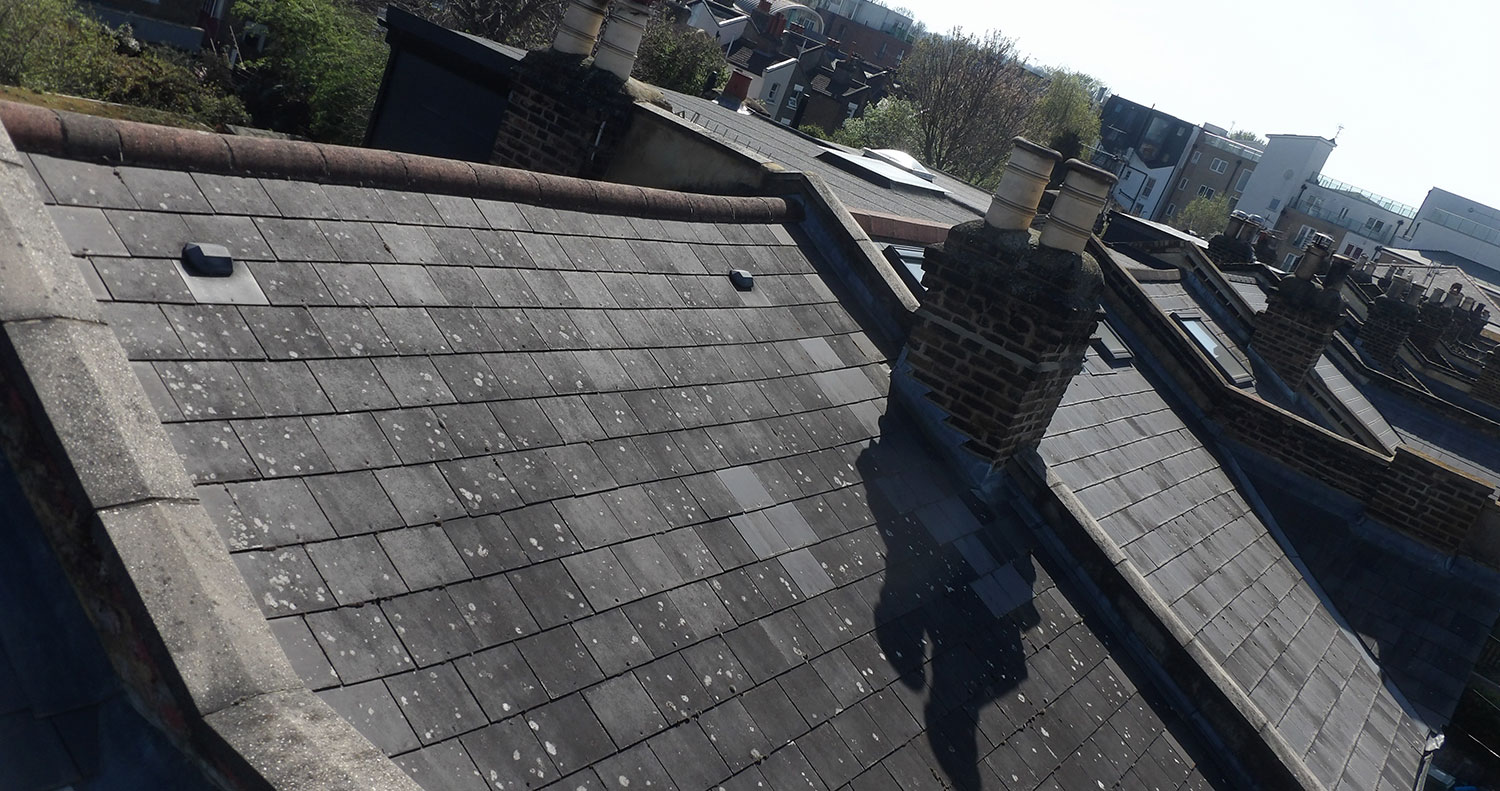
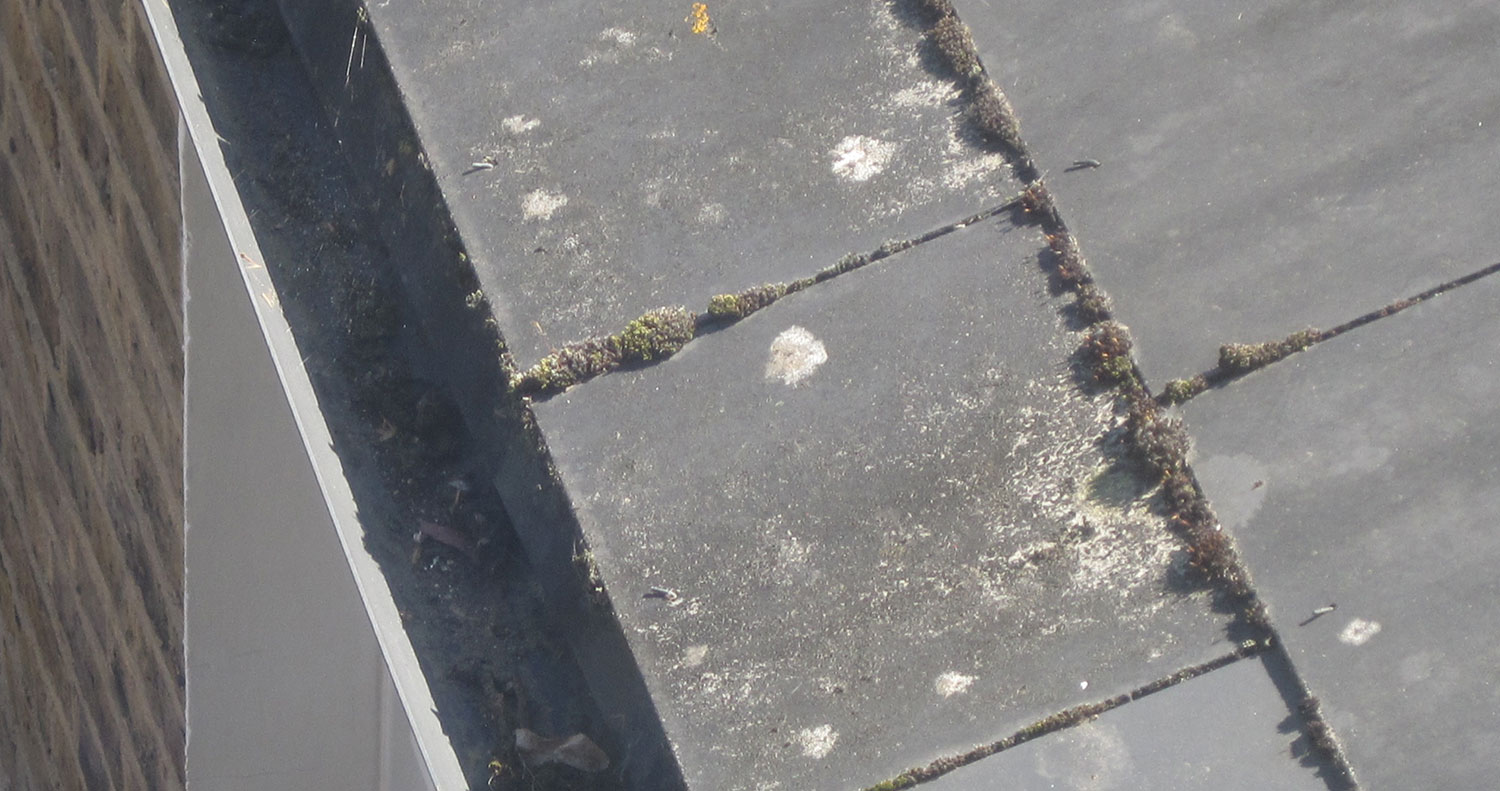
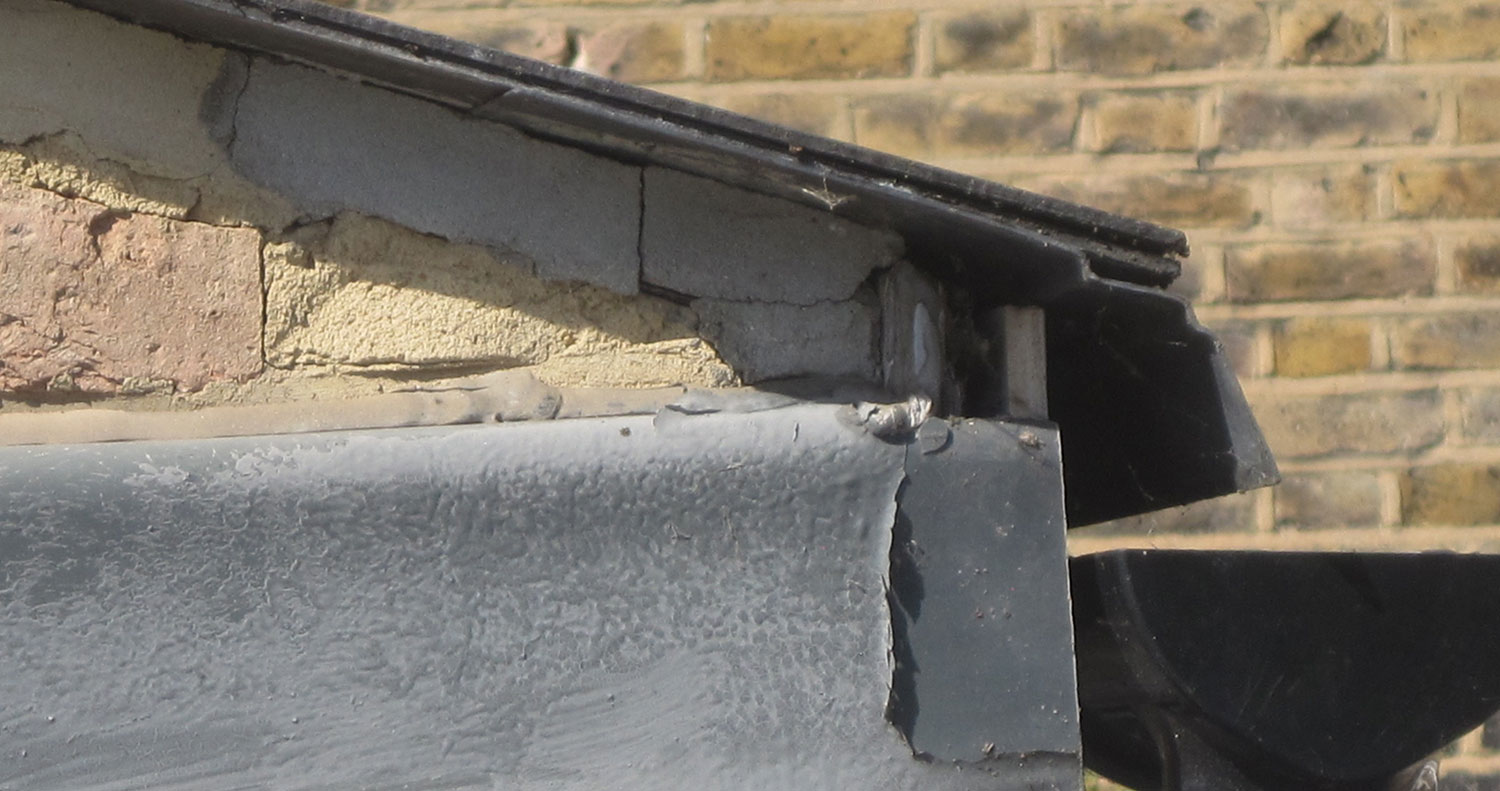
During a recent Level 3 survey, the roof slopes to an attached outbuilding were covered with slates consistent in appearance with asbestos cement. The coverings were visibly aged, with local weathering, surface erosion and signs of previous isolated repairs. Widespread active leakage was not evident at the time of inspection, but the condition suggested that the covering was approaching the end of its useful serviceable life.
Why It Matters
Ageing asbestos-cement slates often remain in place for many years, but with advancing age their performance can become less predictable. Individual slates may crack more readily, matching replacements may be difficult to source and routine repairs may carry additional precautions because of the asbestos content. Once replacement becomes necessary, the cost may extend beyond ordinary re-roofing because controlled removal, handling and disposal are commonly required. In addition, concealed components such as battens, underlay and parts of the supporting roof structure cannot usually be fully assessed until the coverings are removed.
A Balanced View on the Asbestos Issue
It is important to be measured in how this issue is presented. Asbestos-cement products are generally regarded as lower risk than softer or more friable asbestos-containing materials when they remain in sound condition and are left undisturbed. The greater concern tends to arise where they are broken, drilled, cut, heavily weathered or otherwise disturbed during maintenance or replacement works. A visual inspection alone does not conclusively confirm asbestos; where formal confirmation is needed, appropriate sampling and analysis should be undertaken by a competent specialist.
What I Would Tell My Client
The presence of asbestos-cement slates alone would not usually be a reason to withdraw from a purchase. My advice would instead focus on their present condition, likely remaining life and the practical cost implications of eventual replacement. I would want my client to understand that the issue is generally one of forward planning rather than immediate alarm, provided there is no significant breakage, active water ingress or evidence of unsafe disturbance.
Practical Next Steps for a Purchaser or Owner
Allow for eventual replacement in future maintenance budgeting.
Avoid unnecessary disturbance or ad hoc repairs by those unfamiliar with asbestos-cement roofing.
Obtain specialist confirmation if there is any doubt as to the material type and formal verification is required.
Seek quotations from contractors experienced in dealing with asbestos-cement roof coverings where replacement is foreseeable.
Use replacement works as an opportunity to review insulation, ventilation and other concealed roof components.
The Surveyor’s View
Asbestos-cement slate roofs should be judged primarily by their condition and not by their presence alone. Where the covering is weathered and evidently nearing the end of its serviceable life, the sensible approach is usually to inform the purchaser, avoid unnecessary disturbance and plan for controlled replacement in due course. That allows the client to proceed on an informed basis, rather than reacting to the word “asbestos” without context.
If you are purchasing an older or altered property and would like a detailed Level 3 Survey, please get in touch